 VapeWholesaleHub
Atomizer Product Testing Laboratories Explained — Low Minimum Quantities
Everything below applies whether you are ordering one mixed carton or a full container. The numbers scale, but the logic does not change, which is the point of writing it down once.
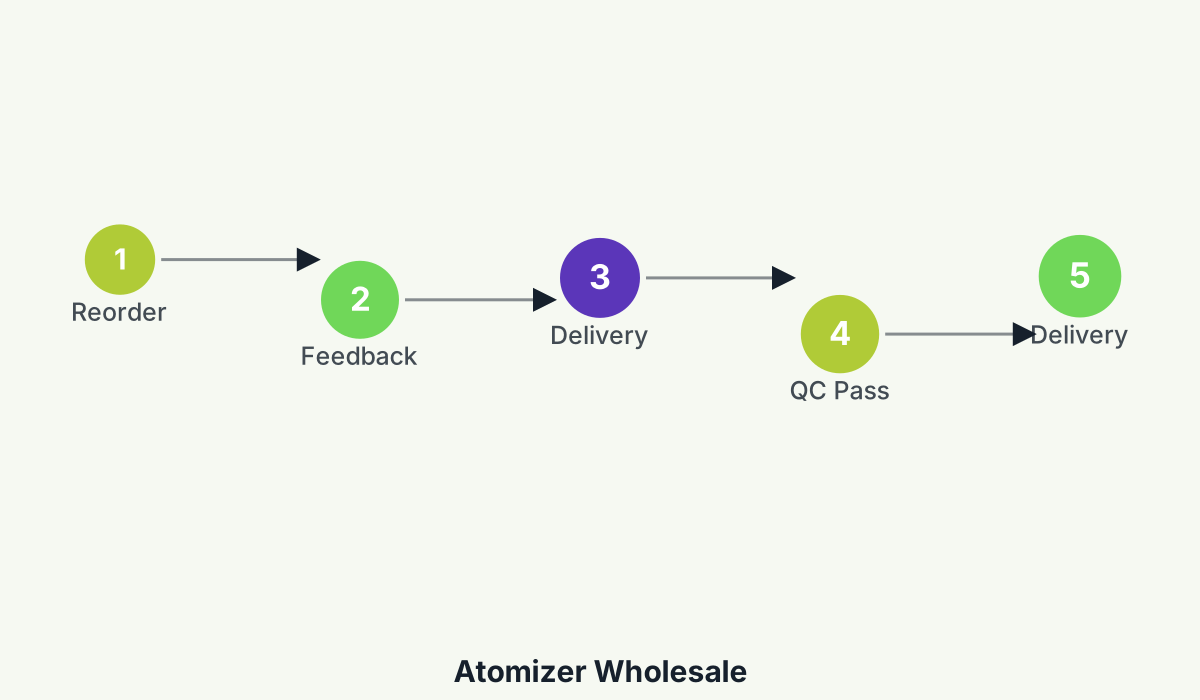
What to Fix Before Approving Atomizer
Two specifications that matter more than buyers expect: the seal integrity after a drop test and the consistency of the draw from first use to last. Both are measurable before you commit to volume.
Ask any factory for the same atomizer sample twice, three months apart. If the second sample drifts, the production line is running without statistical control and your reviews will drift with it. Consistency over time is a more useful signal than a single good sample.
| Product category | Open system |
|---|---|
| Resistance band | 1.2 - 1.4 ohm |
| Capacity tolerance | +/- 3% |
| Puff count method | Machine cycle 2s on / 18s off |
| Master carton | 200 units |
| Carton weight | 3.3 kg |
| Shelf life | 18 months |
| Storage | 15-25 C, dry, away from direct light |
Quality Control in Practice
Random checks are fine, but weight the sample towards the start and end of a atomizer production run. Those are where a line is most likely to drift.
Keep a photo record of every atomizer approval sample. Written descriptions age badly; a dated photograph next to a delivered unit settles most arguments in seconds.
- Ask how the factory measures puff count, then compare like with like.
- Plan the switch from air to sea freight before you need it.
- Write the complaint threshold into the order terms.
- Keep sealed retained samples from every production batch.
- Start with a mixed carton and let your own sell-through decide.
Logistics That Protect Margin
Freight is the hidden half of atomizer unit economics. A denser master carton can save more per unit than a hard negotiation on factory price, because the saving repeats on every reorder rather than once.
Track atomizer landed cost per unit as a running number, including duty and local delivery. It is the only figure that tells you whether a supplier change actually improved anything.
Positioning Atomizer on Your Shelf
Atomizer sits at an interesting point in the assortment. It is familiar enough to be an impulse purchase and specific enough to build a repeat pattern around. Treating it as either pure commodity or pure specialty both lead to poor results.
Modelling a Healthy Margin
Build atomizer price tiers around order sizes your customers actually place. Tiers that only make sense on a spreadsheet get ignored, and you end up discounting ad hoc instead.
When atomizer input costs move, ask which component moved. A generic price increase hides whether you are paying for cells, packaging or simply a busy production calendar.
Indicative reference points for planning purposes: entry tier from USD 1.65 per unit at 500 units, mid tier at USD 1.67, and volume tier at USD 0.60 for full container quantities. These figures move with specification, packaging and freight, so treat them as a shape rather than a quote.
Practical Checklist
- Write the complaint threshold into the order terms.
- Agree the tolerance band in writing before approving artwork.
- Model landed cost, not ex-works price, when comparing quotes.
- Confirm the current customs classification with your own broker.
- Keep sealed retained samples from every production batch.
- Check carton dimensions against your freight quote before confirming.
Frequently Asked Questions
How should atomizer be stored?
Cool, dry and out of direct sunlight. Heat and light are the two things that shorten shelf life fastest. Rotate stock by batch code rather than by arrival date, and keep cartons off concrete floors in humid warehouses.
Is there support for in-store material?
Yes. Shelf talkers, counter cards and simple planogram suggestions are available for atomizer ranges that reach a sensible volume. Most retailers find the plain strength and flavour cards do the most work.
Can I visit the production facility?
Yes, and we encourage it for larger programmes. Visits are most useful when you already have a draft specification, because you can then check the specific processes behind the numbers you care about.
How long does a atomizer order take to arrive?
Production typically takes ten to eighteen working days after artwork approval, and transit depends on the method you choose. Air express is fastest, sea freight is cheapest at volume. We confirm both at quotation so there is no surprise later.
Can I mix strengths in one order?
In most cases yes, as long as each strength meets the minimum run length. Mixed strength cartons are popular with retailers building their first display because they show the full ladder without over committing.
Next Step
Whether you order from us or elsewhere, keep a retained sample from every batch. It costs almost nothing and it is the single most effective protection available to a atomizer buyer.
Related Reading
- Atomizer Dual Sourcing Without Losing Consistency — the Middle East
- Understanding Atomizer Manufacturing From the Inside — Regional Distributors
- Atomizer Warehouse Picking and Batch Rotation — Real Numbers Only
- Atomizer Shelf Rotation for Multi Site Retailers — Cash-and-Carry Formats
- How to Brief a Factory on Atomizer — Cash-and-Carry Formats
- Atomizer Shelf Life, Batch Codes and Traceability — Busy Buyers