 VapeWholesaleHub
Atomizer Compliance Basics for Importers — Replenishment Cycles
If you are comparing atomizer suppliers right now, you are probably looking at three quotes that look identical and cost very different amounts. That gap usually comes down to cell grade, coil consistency and how honest the factory is about tolerances. Let us unpack it.
How Atomizer Batches Are Checked
The cheapest quality control step is a retained sample. Keeping three sealed units from every atomizer batch costs almost nothing and turns any dispute into a simple comparison instead of an argument over photographs.
- Model landed cost, not ex-works price, when comparing quotes.
- Confirm the current customs classification with your own broker.
- Agree the tolerance band in writing before approving artwork.
- Check carton dimensions against your freight quote before confirming.
- Ask how the factory measures puff count, then compare like with like.
Where Atomizer Sits in the Range
Before anything else, decide which customer you are buying atomizer for. A convenience counter with limited shelf depth needs a tight range that turns quickly, while a specialist shop can carry a deeper ladder of options and educate buyers into higher ticket lines.
Range decisions for atomizer should start from shelf space, not from a supplier catalogue. Count the facings you actually have, then decide how many of them this line deserves against what it currently earns.
Modelling a Healthy Margin
Build atomizer price tiers around order sizes your customers actually place. Tiers that only make sense on a spreadsheet get ignored, and you end up discounting ad hoc instead.
Compare atomizer quotes on the same incoterm. A price that looks better because it excludes a cost you assumed was included is not a saving at all.
Indicative reference points for planning purposes: entry tier from USD 1.40 per unit at 1000 units, mid tier at USD 1.76, and volume tier at USD 1.01 for full container quantities. These figures move with specification, packaging and freight, so treat them as a shape rather than a quote.
Getting Atomizer to Your Warehouse
Carton dimensions for atomizer are a design decision, not a packing afterthought. A few centimetres on the master carton can change how many units fit a pallet, and that repeats on every order.
Air freight makes sense for a first atomizer order when you need to test demand quickly, but almost every steady programme moves to sea freight once volumes stabilise. Planning that switch early avoids a painful margin squeeze later.
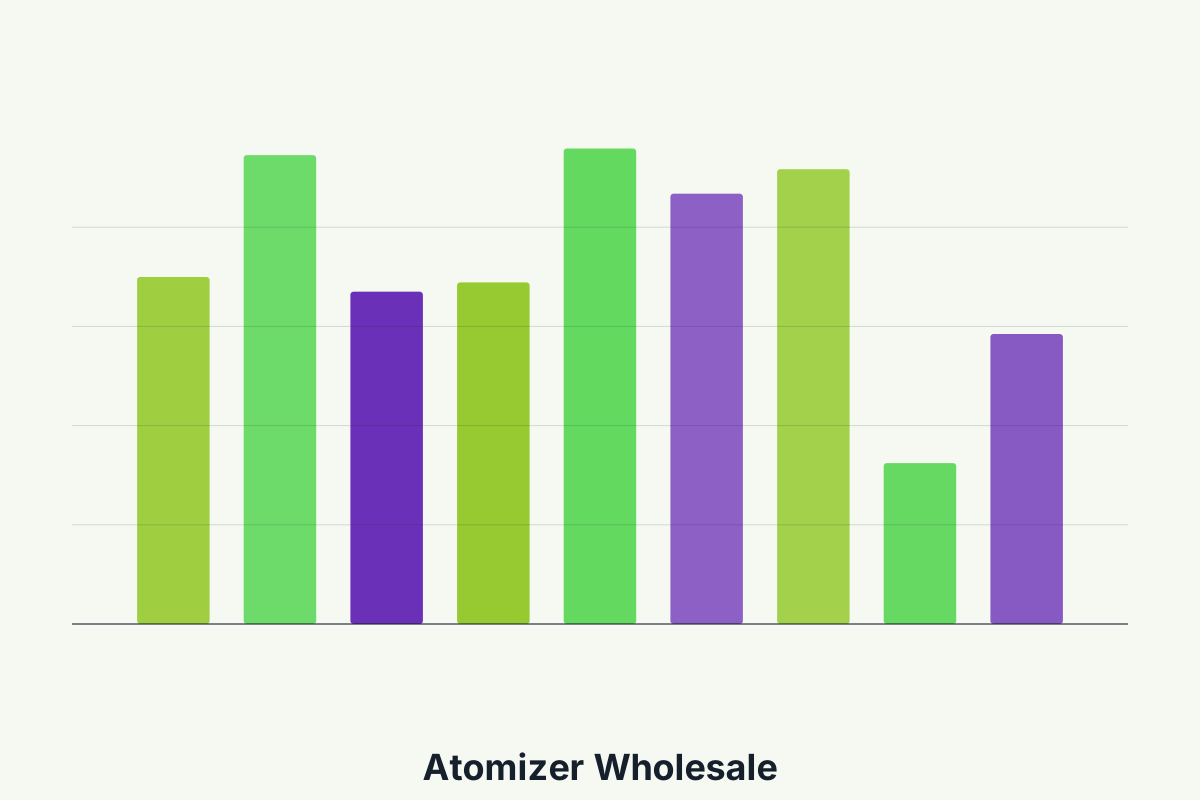
Selling Atomizer at Store Level
Keep the atomizer range tidy. A half empty shelf reads as a dying line, and customers interpret it that way faster than any signage can correct.
The Specification That Matters
Ask for the atomizer specification in the same units you intend to measure in. A metric quoted in a form you cannot verify on arrival is not a specification, it is a claim.
| Product category | Pod system |
|---|---|
| Resistance band | 0.8 - 1.0 ohm |
| Capacity tolerance | +/- 3% |
| Puff count method | Declared by capacity |
| Master carton | 300 units |
| Carton weight | 4.0 kg |
| Shelf life | 24 months |
| Storage | 15-25 C, dry, away from direct light |
Practical Checklist
- Ask how the factory measures puff count, then compare like with like.
- Rotate stock by batch code rather than by delivery date.
- Plan the switch from air to sea freight before you need it.
- Agree the tolerance band in writing before approving artwork.
- Write the complaint threshold into the order terms.
- Check carton dimensions against your freight quote before confirming.
Frequently Asked Questions
Can I mix strengths in one order?
In most cases yes, as long as each strength meets the minimum run length. Mixed strength cartons are popular with retailers building their first display because they show the full ladder without over committing.
Do you hold stock for regular customers?
For established programmes we can reserve production slots and, in some cases, hold finished atomizer stock against a forecast. It removes most of the lead time risk from a reorder and is worth discussing once volumes are stable.
How should atomizer be stored?
Cool, dry and out of direct sunlight. Heat and light are the two things that shorten shelf life fastest. Rotate stock by batch code rather than by arrival date, and keep cartons off concrete floors in humid warehouses.
What happens if my market changes its rules?
Regulations move, and packaging or documentation sometimes has to follow. We keep approved artwork files on hand so that a required change is a reprint rather than a redesign, which keeps the cost and delay down.
Next Step
Start smaller than feels comfortable, measure honestly, then scale what worked. That sequence has saved more of our customers money than any negotiation tactic we could suggest.
Related Reading
- Atomizer Loyalty Effects in Repeat Categories — Retail Chains
- Atomizer Specifications Every Buyer Should Check — Premium Shelf Programmes
- Atomizer Handling, Labeling and Regulatory Paperwork — Southeast Asia
- Atomizer Lead Time Buffers That Actually Work — a Factory Floor View
- Atomizer Sell Through Tracking Without Expensive Tools — Multi-Warehouse Networks
- Atomizer Cost Breakdown: What You Are Really Paying For — Wholesale Clubs